Cornish Native 'Fal Oyster' (Ostrea edulis)

DEFRA recently contacted me advising me that 'someone' had complained this page was out of date, that we are no longer the 'only' verified PDO Fal Oyster producer and DEFRA also advised that there are now new logos for the UK GI Scheme, so here is the revised information.
In 2021 the UK introduced new logos for the UK GI Scheme, after much public consultation the result of which, in my honest opinion, was all the way through my consultation with DEFRA and still is, that the new logos are too similar and do not recognise the important differences between the PDO provenance and PGI indication criteria, which in short are:
A PGI oyster company can buy 'oysters' from anywhere (including a PDO fishery) and because of the geographical importance associated with the food name they can totally rebrand the oysters as their own, whereas a PDO company cannot buy 'oysters' and rebrand them because they must 'originate' from that area and be "produced, processed AND packaged in a given area using traditional methods".
EU logos are:

UK logos are:

So why did it take over 4 years for Cornish oyster merchants to even want to apply for verification and why does the word 'origin' now appear on the UK PGI logo? Especially if the oysters don't have to originate from that area? Unless of course it is a deliberate attempt by lesser provenance brands to diminish the very provenance of the strict PDO verification... ???
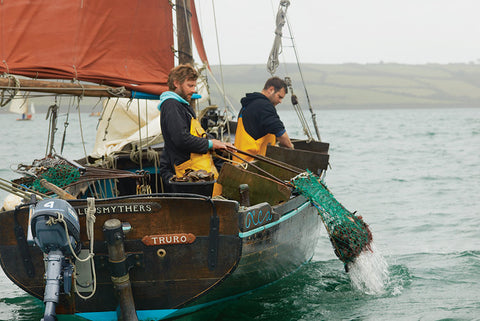
In 1602 Sir Richard Carew saw fishermen catching oysters with "a thick strong net fastened to three spills of iron, and drawn to the boat's stern, gathering whatsoever it meeteth lying in the bottom of the water, out of which... they cull the oyster".
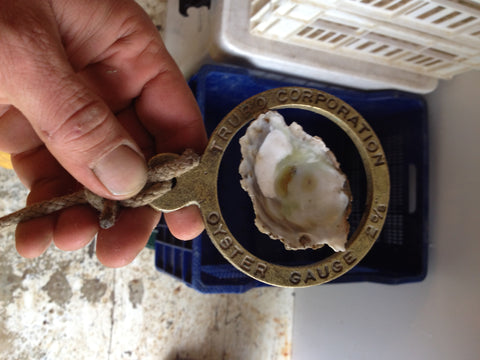
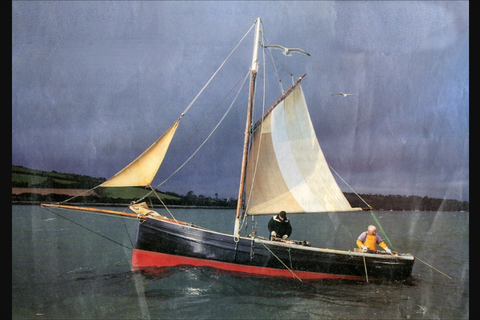
The last wild native oyster beds lie in this beautiful Cornish estuary. In 1876, in an early example of conservation legislation, Truro Corporation passed byelaws forbidding the mechanised harvesting of oysters. The Fal oystermen use gaff-rigged cutters, some over a century old, the last in Europe to fish commercially under sail. "Upstream they dredge with punts; not what see boys in blazers and girls in muslin poling along the Cam in, but hefty rowing boats."
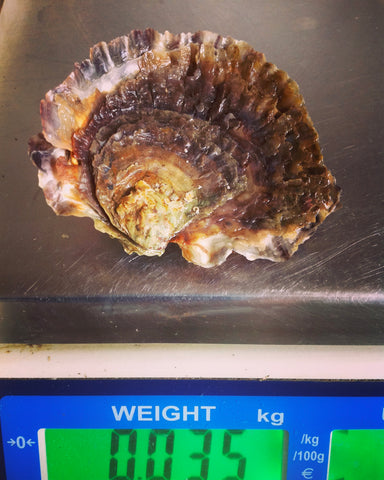
In 2008 Ranger purchased and restored a traditional Truro River Oyster Boat named 'Alf Smythers'. And aboard this 50 year old gaff cutter he hand hauls dredges during the open fishing season from 1st October to 31st March. The Fal Fishery is closed to allow natural reproduction, but is not happening due to lack of density of mature native oysters and the minimum landing size (67mm longest shell length) that encourages juvenile oysters to be sold on to other fisheries, when they may not have even left one offspring, see BBC Fal Oyster row 2014!
In 2009 he then went on to set up a CEFAS approved depuration centre at Mylor Yacht Harbour so he could purify his own catch, where he still operates more than 10 years later. Whilst trying to think of a name for his new venture he looked back historically and to stand out from the crowd he wanted to use a name no one else had used, previously native oysters from the Truro and Fal Rivers were known as "Truro Corporation Oysters" & "Truro River Oysters" up until the early 20th century, then latterly "Falmouth Bay Oysters" & "Falmouth Oysters" and after relaying in the Helford they were also known as "Helford Natives" and then "Duchy Oysters".
It goes without saying that they may have had many names going back to the Roman or even the Phoenicians, that were probably responsible for the species being introduced to the shallow salty estuarine waters. So after many meetings with chefs and restauranteurs it was decided to call all native oysters, that had been caught by Ranger and put through his approved purification process at Mylor, as “Cornish Native Oysters”... a new website was set up in 2009 (CornishNativeOysters.co.uk that now forwards to this page) to supply customers at home with his widely recognised and much appreciated hand gathered sail boat natives... and indeed the certificate issued on 13th October 2009 named the depuration centre with this unique name!
(Please note: WE HAVE BEEN IMITATED BY A COMPANY claiming the name goes back to Roman Times, but they simply copied text from our old website when we were building the reputation and stated “our Cornish Native Oysters have been found on the Truro & Fal Rivers for centuries, WE ARE NOTHING TO DO WITH AND HAVE NEVER SOLD OUR OYSTERS TO CORNISH NATIVE OYSTERS LTD. who also operate as Cornish Oysters Ltd. and believe it or not Colchester Oysters Ltd. too!! If we had the funds to pursue illegally “passing off” as us we would, however we are focused on being honest and on repopulating the fishery instead)
In 2007 an initiative was started to secure a Protected Food Name for the unique gathering techniques for production, the unique location, the local processing and packaging that was necessary for such a prestigious accolade... but it took until 2016 for the Protected Designation of Origin (PDO) status to be awarded to the “Fal Oyster” and for the processed product to be recognised as totally unique in the world of oysters!
In 2012 Ranger set up Fal Oyster Ltd. to market this unique status, to raise awareness of the unique sailing fishing fleet and to open his doors to working with other skippers who were joining in on the unique opportunity the PDO was sure to provide. Unfortunately, with chefs wanting 1000 grade 2 (75-100g) Fal Oysters it was necessary for him to purchase almost 4000 native oysters so he could grade out the desired 1000. This in turn left almost 3000 native oysters that were undesirable due to a large majority being too small or a smaller percentage being too large. With little storage for the juveniles most of which were scattered back on the fishery or lost to mortality in the intertidal areas known as ‘lays’.
Despite efforts with his 10 years of Pop Up Gatherings and his truly stunning Pop Up Oyster Bar, converting a 20ft Shipping container to a bespoke open air kitchen and restaurant, the population of wild native oysters has been depleting internationally for a number of decades due to overfishing, disease and pollution...
So yet again Ranger has had to rethink... this is where the Fal Fishery Cooperative CIC (Community Interest Company) and its #SavingESTER Crowdfunder campaign steps up to the challenge of repopulating the fishery, from what is left of the last truly wild Native Oysters, in a local hatchery that he will create (if he reaches the target) in his depuration centre during the summers closed fishing season.
Common myths about Fal Oysters:
5: Generally our shellfish waters are pretty clean, however water companies are licensed by the Environment Agency to discharge raw sewage and Port Health struggle to report test results within 7 days. The good news is ALL approved purification centres must reduce very high levels to very low levels before oysters can be consumed. So why do they close the river for human consumption but not for harvesting?
New premises at same address
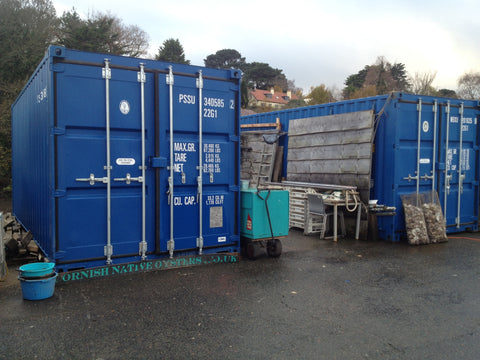
Fal Oyster Ltd. t/a Cornish Native Oysters since 2009
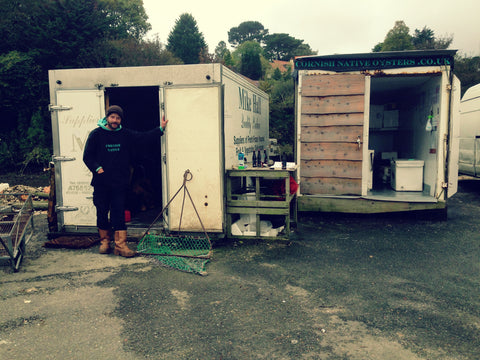
When we we set up our processing business in 2009 we named it 'Cornish Native Oysters' so we were not treading on the toes of other well established merchants, but they didn't want to buy our better oysters for better money because they focused on exporting the small juveniles for relaying and rebranding, crazy we know.
Between 2015 and 2018 we were the ONLY company verified by Trading Standards to use the Fal Oyster PDO, since then a few businesses have now signed up due to Brexit and markets not wanting small oysters... we are now more impersonated than we would dare with one company even registering our Purification Centre trading name as a dormant Ltd company name... Shows we could have been right all along... We need to improve the fishery management and the gathering standards ie Minimum Landing Size, that will also mean we can protect the future populations against exploitation, thus we formed a Community Interest Company and the SavingESTER Crowdfunder campaign

Click EU logo above for PDO document
UK Protected Food Names
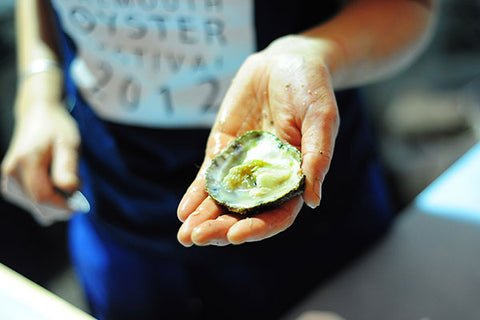
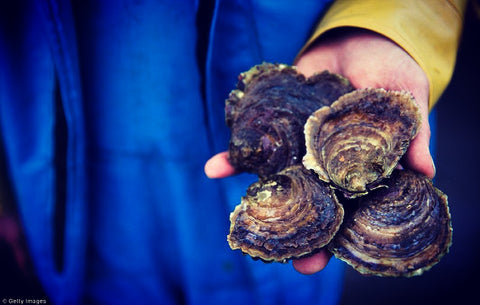
Cornish Native Oysters or 'Fal Oysters' are native oysters harvested from the Fal Estuary and are famed for their distinctive sweet, fresh and delicate flavour.

Cornwall Council Protected Food Names
http://www.cornwall.gov.uk/protectednames
CEFAS Public Register
https://www.cefas.co.uk/eu-register/annex-ii/?id=1641955&filter=C
Important Species
http://jncc.defra.gov.uk/page-5659
Important to the Fal Fishery
http://www.bbc.co.uk/news/uk-england-cornwall-25957987
Objective One Fisheries programme manager, Clare Leverton said, "Fal Oysters really are an exceptional product, distinctive to the region and of a very high quality. The fishing methods couldn't be more sustainable”
http://www.regsw.org.uk/content/casestudies/viewitem.aspx?artID=2746
Perhaps the most sustainable fishery in the world is the Fal River oyster fishery (officially known as the Fal Fishery), the last oyster fishery in Europe harvested under sail by Europe’s last commercial sailing fleet. Here on the River Fal 'Fal Oysters' (oystera edulis) have been harvested in more or less the same, highly sustainable, fashion, without the use of mechanical power, for more than 500 years.
01 Pêcher autrement Different fish VOST from Le Groupe Ouest on Vimeo.
This is a natural and wild fishery where the oysters are not cultured or bred. There is a small amount of husbandry of the wild and natural beds as during the process of fishing the substrate (cultch) is moved by the dredge which keeps the fishery in good heart, and also occasional extra dredging of the beds without harvesting (described as harrowing) further improves the oyster beds and encourages a good spatfall (young oysters to settle).
The oyster season starts on the 1st October and closes on the 31st March, the working hours are 0900hrs to 1500hrs Monday to Friday and 0900hrs to 1300hrs on Saturday. The oysters are wild and propagate naturally, consequently the stock size fluctuates form season to season and in order to prevent over-fishing a minimum size of 67mm is imposed and the Carrick Council oyster bailiff is responsible for policing it. All dredgermen must be licensed.
Extract from HVMCA newsletter No.30 Spring 2005